


SEAGULL ST3600 (3601) / ETA6497
🛠️ Basic Specifications:
- Manufacturer: Tianjin Seagull Watch Group, China
- Caliber: ST3601
- Type: Hand-wound (manual wind) movement, no automatic winding
- Movement type: Mechanical manual
📏 Dimensions:
- Diameter: 36.6 mm (16½ lignes)
- Height: Approx. 4.0 mm
- Dial feet positions: Standard for large hand-wound watches
⚙️ Technical Details:
- Jewels: 17
- Beat rate: 21,600 vibrations per hour (6 beats per second / 3 Hz)
- Power reserve: Approximately 42 hours
- Manual winding only: Yes (no rotor, no automatic winding)
- Hacking (stop seconds): No
⏱️ Functions:
- Display: Hour / Minute / Small seconds (usually at 9 (ST3601) or 6 o’clock (ST3620))
- Date: None
- Hand hole diameters:
- Hour: 1.50 mm
- Minute: 0.90 mm
- Small seconds: 0.25 mm
-
📈 Accuracy (factory specs):
- Daily rate: −20 to +40 seconds/day (can be regulated)
⚒️ Compatibility / Use Cases:
- Based on: Vintage Unitas/ETA 6497-style architecture
- Common in: Pilot watches, dress watches, display-back models
- Visual appeal: Often used with exhibition casebacks due to large, attractive bridges and gears
- Variants: Some versions have Geneva stripes or blued screws
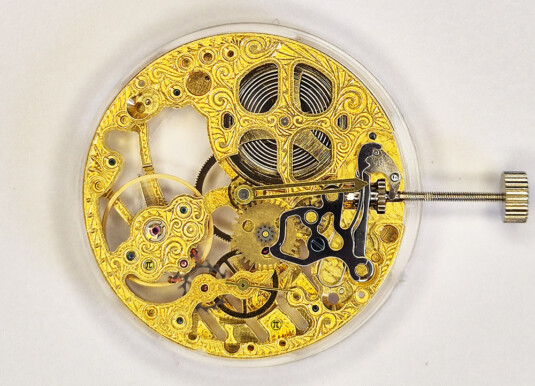

ST3620SK
Above and to the left is a variant with the designation ST3620 Skeleton. The "20" in the designation indicates that the seconds display is at 6 o'clock (if "00", it is at 9 o'clock).
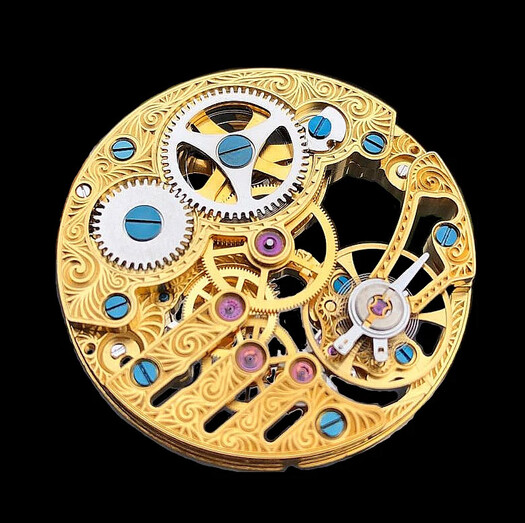
My experience with the movement
It is a rather old construction that was originally designed by ETA for a pocket watch. The Seagull ST3601 is a hand-wound mechanical movement made by Tianjin Seagull, one of China's oldest and most respected watch manufacturers. Inspired by the Swiss ETA/Unitas 6497, it features a large 16.5 ligne (≈36.6 mm) diameter, 17 jewels, and a smooth-running 21,600 vibrations per hour (3 Hz) frequency. The movement offers a power reserve of approximately 40 hours and is widely used in dress watches and skeleton designs due to its classic, robust construction and large size. I have already installed the movement in a few watches. It is quite a challenge to insert the second hand. Otherwise, however, the movement causes no problems. You can build quite nice pilot's watches with it. I see this experience as training for the manufacture of watches based on ETA 7750, because you have three such tiny hands to insert. It is a very simply constructed movement. It is always recommended to learn the watchmaker's repair skills. I also find the regulation very simple and reliable. It is worlds better designed than the stubborn NH movements from Seiko.
